Are Solar Panels Worth It in Pittsburgh? The 2025 Truth About Costs, Savings & ROI
You’re staring at another electric bill that just went up. Again. And you’re wondering, are solar panels worth it in Pittsburgh, PA? Where we’ve got more cloudy days than a weatherman’s worst nightmare?
Here’s the thing: You’re not alone. We hear this all the time from Pittsburgh homeowners. The cloudiness worry is real. But so are the electricity rate increases in Pennsylvania that just hit 5-16% in June 2025.
So let’s cut through the noise and talk real numbers. What does solar actually cost in Pittsburgh? How much can you really save? And with the federal tax credit ending December 31, 2025, is this your last chance to make solar affordable?
At Ethical Energy Solar, we’ve installed hundreds of systems across the Pittsburgh area. We’ve seen what works, what doesn’t, and what actually saves homeowners money over 25 years.
This guide breaks down everything: actual costs, realistic payback periods, local incentives, and whether solar makes financial sense for your specific situation. No sales pitch. Just transparent facts from folks who do this every day in Pittsburgh’s unique climate.
Let’s figure out if solar is worth it for you.
What Solar Panels Actually Cost in Pittsburgh Right Now
Bottom line up front: $3.11 per watt is the current average in Pittsburgh.
For a typical 5 kW system (enough for most homes), you’re looking at $15,550 before incentives. That’s actually below the national average of $3.26 per watt, according to EnergySage’s marketplace data.
But here’s where it gets interesting.
Breaking Down Real System Costs
The total price depends on what size you need:
- 3 kW system (smaller home, lower usage): $9,330
- 5 kW system (typical Pittsburgh home): $15,550
- 7 kW system (larger home or EV charging): $21,770
- 10 kW system (high consumption household): $31,100
These numbers include everything from panels, inverters, mounting hardware, labor, permits, and the works.
What affects your specific cost:
- Roof complexity: Multiple roof planes or steep pitches add installation time
- Panel quality: Premium efficiency panels (24%+ efficiency) cost more but generate more power in limited space
- Inverter type: String inverters vs. microinverters vs. power optimizers have different price points
- Electrical upgrades: Older homes sometimes need panel upgrades to handle solar interconnection
The Federal Tax Credit Deadline You Can't Ignore
Here’s the urgent part.
Through December 31, 2025, you might be able to get 30% back as a federal tax credit. That’s confirmed by the IRS and it’s a hard deadline.
For that $15,550system? You’d get $4,665 back when you file taxes.
Your actual out-of-pocket: $10,885.
After December 31, 2025? That tax credit goes to zero. Not 26%. Not 22%. Zero.
So if you’re seriously considering solar, you need to start the process now. Installation typically takes 4-6 months from consultation to final utility approval. Do the math, waiting until spring 2025 means you’ll likely miss the deadline.
We’re not trying to pressure you. We’re just being straight about the timeline. Learn more about how to save thousands with the 30% solar tax credit before it disappears. Since technically the solar system must be installed and PTO’d before December 31, 2025 for you to qualify for the solar tax credit.
How Much Pittsburgh Homeowners Actually Save With Solar
Let’s talk real savings, not marketing fluff.
The average 5 kW system in Pittsburgh generates 5,500-6,000 kWh annually. That’s accounting for our cloudiness, winter snow, and everything else.
With Duquesne Light’s current rate of 12.430 cents per kWh (as of June 2025), that’s about $700-$750 in electricity value per year just from generation.
But wait it gets better with net metering.
Net Metering Is Your Secret Weapon
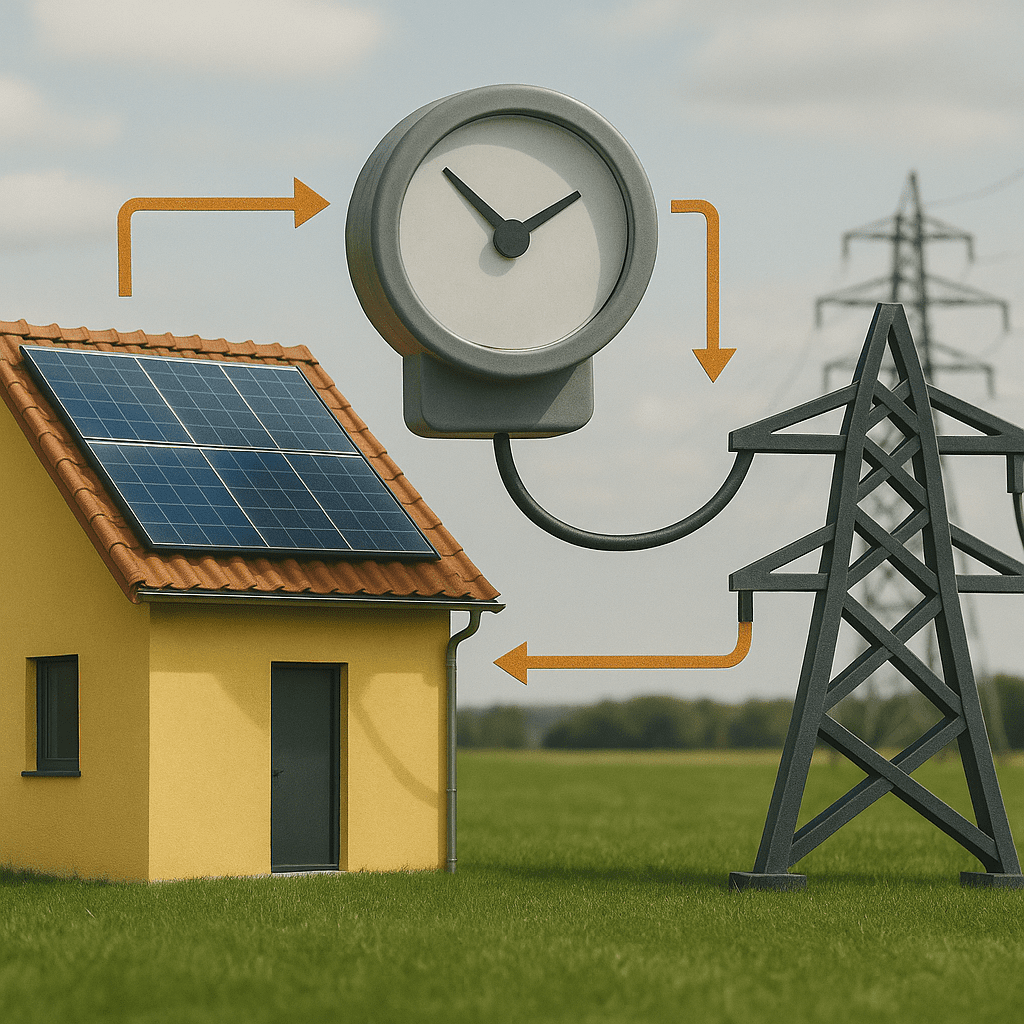
Pennsylvania has some of the best net metering laws in the country. Here’s how it works:
During summer: Your panels generate way more than you use. Those extra kilowatt-hours bank as credits at full retail rate (12.430 cents per kWh).
During winter: Production drops, but you draw down those summer credits to offset your bills.
You’re essentially storing summer sunshine to use in January. Pretty smart, right?
Duquesne Light gives you 1-to-1 retail credit for every kilowatt-hour you send to the grid. Not wholesale rates. Not partial credit. Full retail value.
This is huge. Without net metering, Pittsburgh solar would be a much tougher sell. Read our complete guide on Pennsylvania net metering policies to understand exactly how this benefit maximizes your savings.
Real Annual Savings Breakdown
For a typical Pittsburgh home with a 5 kW system:
- Electricity bill reduction: $800-$1,200/year (depending on your usage)
- Solar Renewable Energy Credits (SRECs): $137-$210/year
- Total first-year savings: $937-$1,410/year
And here’s the kicker, those savings grow as electricity rates climb.
Pennsylvania rates just jumped 5-16% in 2025. The Pennsylvania Public Utility Commission projects continued increases as aging infrastructure gets replaced and natural gas prices stay volatile.
Lock in today’s electricity cost with solar, and you’re protected from future rate hikes for 25+ years. Curious about how solar panels save you money beyond just offsetting your electric bill? We break down all the financial benefits.
Payback Period: When Does Solar Start Making You Money?
The honest answer? It depends.
Best case scenario: 6-8 years with the federal tax credit, strong net metering benefits, and SREC sales.
More conservative estimate: 9-15 years depending on your specific situation.
Here’s the math on a typical system:
With federal tax credit (before 12/31/2025):
- System cost: $13,434
- Federal tax credit: -$4,030
- Net cost: $9,404
- Annual savings: $950 (conservative estimate)
- Payback: 9.9 years
Without federal tax credit (after 12/31/2025):
- System cost: $13,434
- Annual savings: $950
- Payback: 14.1 years
See the difference that tax credit makes?
The 25-Year Picture Is Where Solar Shines
After payback, you’ve got 10-15+ years of essentially free electricity.
Total 25-year savings range from $39,000 to $69,000 depending on:
- Whether you caught the federal tax credit
- How much electricity rates increase (we’re assuming 2-5% annually)
- Your actual energy consumption
- SREC market prices
- System performance and maintenance
We’ve had customers tell us their monthly electric bills went from $180+ to $15-30 (just the connection fee). That adds up fast.
Pittsburgh's Climate: Let's Address the Cloudiness Question
Okay, let’s tackle the elephant in the room.
Yes, Pittsburgh is cloudy. We rank 11th nationally for cloud cover. We get about 6.5 peak sun hours daily versus 7-8 hours in sunnier places.
So does solar work here?
Absolutely. Here’s why you shouldn’t worry:
Solar Panels Don't Need Blazing Sunshine
Modern panels generate electricity even under clouds, just at reduced output. You’re not getting zero power on overcast days. More like 10-25% of full capacity, which still adds up.
Plus, Pittsburgh’s cooler climate actually helps panel efficiency. Silicon panels lose efficiency when they get super hot (like in Phoenix where panels hit 160°F+). Our moderate temperatures mean panels operate closer to their rated capacity.
Germany Proved Cloudy Climates Work
Fun fact: Pittsburgh gets more solar potential than Germany, which leads the world in solar installations per capita.
If solar works in Deutschland, it works in Da Burgh.
The National Renewable Energy Laboratory models account for local weather patterns. Those 5,500-6,000 kWh production estimates? Already factored in our clouds, rain, and snow.
What About Winter and Snow?
Real talk: Winter production drops to 300-400 kWh monthly versus 600+ in summer.
But net metering fixes this. Your summer credits carry through to offset winter consumption.
As for snow covering panels? It slides off naturally within a day or two when temperatures warm. Most systems are installed at 15-30 degree angles specifically to let snow shed.
We’ve installed systems throughout Pittsburgh for years. Snow is a minor inconvenience, not a deal-breaker. Still concerned? Here’s the truth about how solar panels perform in winter conditions.
Local Incentives and Programs That Boost Your ROI
Beyond the federal tax credit, here’s what else reduces your costs:
Solar Renewable Energy Credits (SRECs)
Pennsylvania requires utilities to buy a certain percentage of electricity from solar. They buy SRECs from homeowners like you to meet those requirements.
How it works:
- Your system generates 1 SREC for every 1,000 kWh produced
- A 5 kW system creates 5-6 SRECs per year
- Current market price: $25-$35 per SREC
- Annual SREC income: $137-$210
You register through the Generation Attribute Tracking System, and SRECs sell automatically or through brokers.
It’s not a fortune, but it’s extra income that speeds up your payback. Learn everything about Pennsylvania’s SREC program and how to maximize this revenue stream.
Property Tax Exemption
Pennsylvania doesn’t increase your property taxes when you add solar. Your home value goes up (we’ll get to that), but your tax bill doesn’t.
No Sales Tax on Solar Equipment
You’re exempt from Pennsylvania’s 6% sales tax on solar equipment and installation. Saves you another $800+ on a typical system.
Duquesne Light Interconnection Process
Duquesne Light makes interconnection pretty straightforward:
- Net meter installation: free
- Interconnection approval: typically 2-6 weeks
- No recurring fees for net metering participation
They’ve streamlined the process significantly compared to 5-10 years ago. We handle all the paperwork and utility coordination for our customers. It’s honestly one of the smoother parts of going solar.
For a complete overview of Pennsylvania solar panel incentives, including state and local programs you might qualify for, check out our comprehensive guide.
Financing Options: How to Pay for Your System
You’ve got choices. Let’s break down what makes sense for different situations.
Pros:
- No interest charges
- Maximum 25-year savings ($50,000-$70,000)
- Full federal tax credit eligibility
- You own the system outright immediately
Cons:
- Requires $9,400-$13,400 liquid capital
- Longer payback than financed options (but best total return)
Best for: Homeowners with available savings who want maximum lifetime value and can use the tax credit.
Typical terms:
- Interest rates: 7-8% APR
- Repayment period: 10-15 years
- Monthly payment for $13,434 system: ~$130-150
Pros:
- No money down (usually)
- You still own the system and get tax credits
- Monthly payment often equals or beats old electric bill
- After payoff, you’ve got 10-15 years of minimal-cost electricity
Cons:
- Total cost higher due to interest (~$18,700 over 12 years)
- Need decent credit (usually 650+)
Best for: Most homeowners who want ownership benefits without big upfront costs.
How it works:
- Third-party company owns the system on your roof
- You pay them a fixed monthly fee (or per-kWh rate)
- They handle maintenance and repairs
- 20-25 year agreement
Pros:
- $0 down
- Immediate savings on electric bills
- No maintenance responsibility
Cons:
- You forfeit federal tax credit (company claims it)
- 30-50% lower total savings over 25 years
- Doesn’t increase home value
- Can complicate home sales
- Annual rate escalators (1-3%) often included
Best for: Homeowners with insufficient tax liability or those who want zero hassle/responsibility.
Our Honest Take on Financing
We typically recommend loans for most folks. You get ownership benefits, tax credits, and home value bump without draining savings.
Cash purchase makes sense if you’re sitting on funds earning minimal interest elsewhere. The 8-12% effective return from solar beats most conservative investments.
Leases? Only if you truly can’t access other financing or won’t have enough tax liability to use the credit.
At Ethical Energy Solar, we walk through your specific situation to find what actually works for your finances, not what makes us the most commission. Explore all your solar panel financing options in Pennsylvania to find the best fit.
The Installation Process: What to Actually Expect
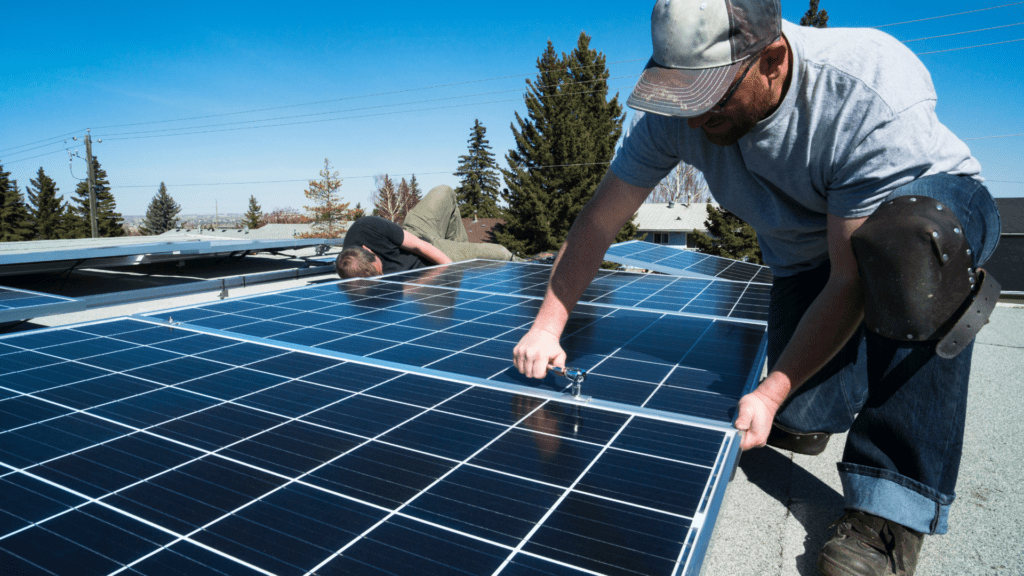
Let’s walk through the real timeline and what happens at each step.
Step 1: Consultation and Site Assessment (Week 1-2)
We come to your home, check out your roof, look at your electrical setup, and review your energy bills.
We’re checking:
- Roof orientation (south or southwest is ideal)
- Shading from trees or nearby buildings
- Roof condition and age (planning a replacement? Do that first)
- Attic access and electrical panel capacity
- Your average electricity consumption
This takes about an hour. You’ll get a custom proposal showing system size, costs, projected production, and estimated savings.
No pressure. No tricks. Just real numbers.
Step 2: Design and Engineering (Week 2-4)
Our engineers create detailed plans:
- Exact panel layout for your roof
- Electrical specifications and wiring diagrams
- Structural calculations (your roof can handle it, panels weigh less than a second layer of shingles)
- Equipment specifications
Step 3: Permits and Approvals (Week 4-8)
We handle all the paperwork:
- Municipal building permits for Allegheny County
- Electrical permits
- Utility interconnection application to Duquesne Light
- HOA approval if applicable
This is the slowest part. Different municipalities have different timelines. Some approve in 2 weeks, others take 6.
Step 4: Installation Day(s) (Week 8-10)
Actual installation: 1-3 days for most homes.
Here’s what happens:
Day 1:
- Install mounting hardware (attached to roof rafters, not just shingles)
- Run electrical conduit
- Mount panels on racking system
- Begin electrical connections
Day 2 (if needed):
- Complete electrical work
- Install inverter(s)
- Connect to your electrical panel
- Clean up and final checks
Your electricity stays on during installation. We might need to shut off power briefly (30-60 minutes) for final connections.
Step 5: Inspection and Permission to Operate (Week 10-16)
Municipal inspection: City or county inspector verifies everything meets code (usually passes first time).
Utility approval: Duquesne Light installs your net meter and gives Permission to Operate (PTO). This takes 2-6 weeks after inspection.
Total timeline: 4-6 months from signing contract to flipping the switch.
Want more details? Read our complete guide on how long it takes to get solar panels installed with tips to expedite the process.
What If You Need a New Roof?
Do the roof first, then solar.
Panels last 25-30 years. If your roof has less than 10 years left, replace it before installation. Otherwise you’re paying to remove and reinstall panels when you re-roof.
We can coordinate with roofing contractors to make the process smooth. Some homeowners do both projects back-to-back. Learn more about our professional roofing services that integrate seamlessly with solar installation.
Maintenance, Warranties, and What Could Go Wrong
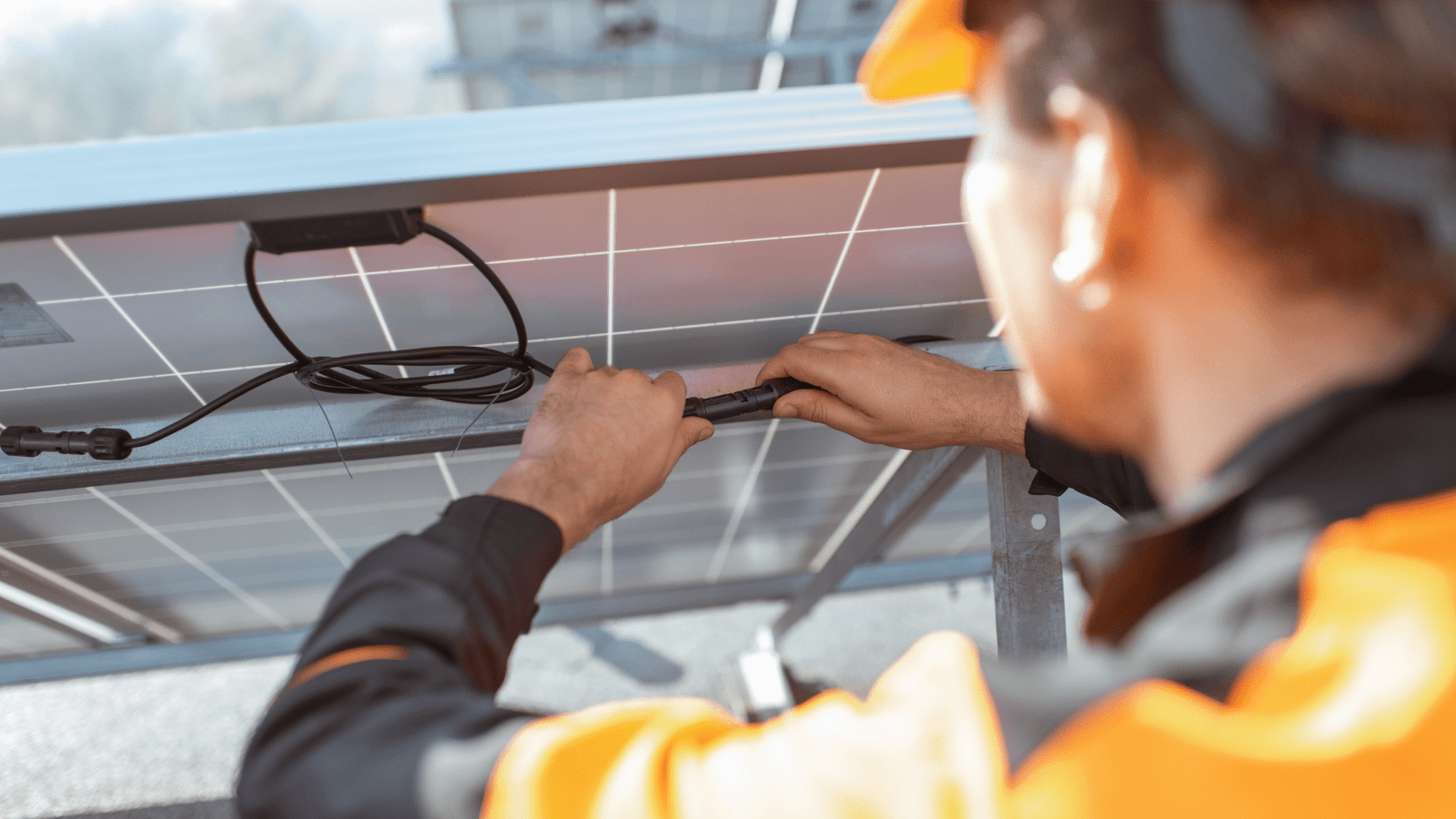 Good news: Solar panels are basically zero-maintenance.
Actual Maintenance Requirements
Rain handles most cleaning. Seriously. Dust and pollen wash off naturally.
Snow management: Usually melts within 1-2 days and slides off. We don’t recommend getting up there to brush it off, not worth the risk.
Annual inspection: Visual check of panels, connections, and inverter. We offer inspection services for $150-200, or you can eyeball it yourself.
Inverter replacement: Expect to replace inverters once around year 10-15. Cost: $2,500-4,000. Plan for this when calculating ROI.
That’s it. No oil changes. No filter replacements. No tune-ups.
Check out our essential solar panel maintenance tips and learn about the maintenance costs of solar panels over their lifetime.
Warranties That Protect Your Investment
Panel performance warranty: 25 years guaranteeing at least 80-85% of original output. Premium brands guarantee 92%.
Panel product warranty: 25 years covering defects and failures.
Inverter warranty: 10 years standard (some offer 25-year extended warranties).
Workmanship warranty: Our installation is covered for 10 years. If something leaks or fails due to installation error, we fix it at no charge.
Panel Degradation: The Slow Power Decline
Panels lose about 0.5% efficiency per year on average. Premium panels lose only 0.3% annually.
After 25 years, your panels will still produce 85-92% of their original output. They don’t suddenly stop working, they just gradually get slightly less efficient.
The National Renewable Energy Laboratory tracks this across thousands of systems nationwide. It’s well-documented and predictable. Learn more about how long solar panels last in real-world conditions.
What About Hail, Storms, and Damage?
Panels are tough. They’re tested to withstand:
- 1-inch hail at 50+ mph
- 140 mph winds
- Heavy snow loads
Homeowners insurance typically covers solar panels like any other part of your roof. Check your policy, but most standard policies include coverage.
In our years installing around Pittsburgh, storm damage is rare. We see more issues from falling tree branches (which would damage your roof regardless) than from the panels themselves failing.
Does Solar Actually Increase Your Home Value?
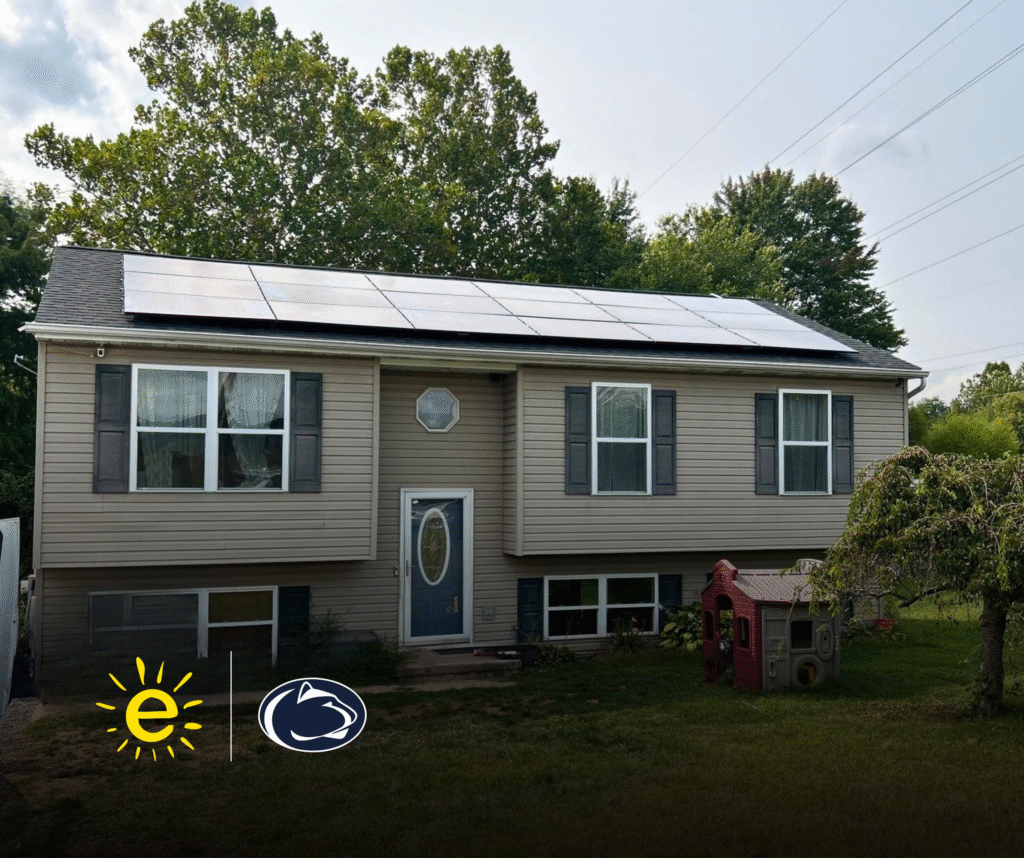
Short answer: Yes, by about $10,000-$15,000 for owned systems.
The Research Backs This Up
Zillow’s research found homes with solar sell for 4.1% more on average than comparable homes without solar.
For a $300,000 Pittsburgh home, that’s roughly $12,300 in added value.
Why? Buyers love the idea of lower electric bills. A fully-paid-off solar system is a selling point that realtors actively market.
Discover exactly how solar panels increase home value and get tips for selling a home with solar panels.
The Ownership Caveat
This only applies to owned systems, not leases or PPAs.
Leased systems can actually complicate sales because buyers need to:
- Qualify to assume the lease
- Agree to the remaining lease terms
- Deal with the third-party company
Cash purchases and fully-paid loans add value. Leases often don’t.
How to Maximize Resale Value
Keep documentation:
- Installation records
- Warranty information
- Production history and savings data
- Maintenance records
Monitor production: Systems that show consistent performance sell better. Proving your panels generated $1,500/year in savings is powerful.
Maintain appearances: Keep panels clean-looking (rain usually handles this) and inverters in good condition.
Are Solar Panels Worth It for YOUR Pittsburgh Home?
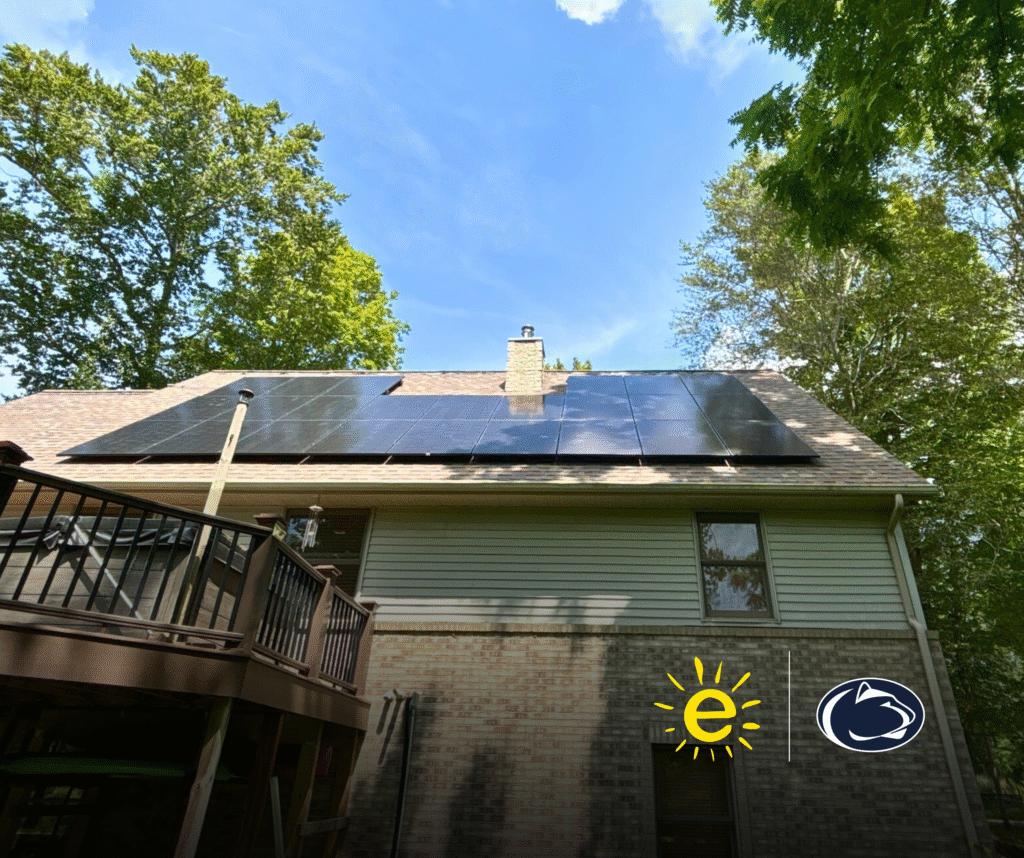
Let’s get specific. Solar makes the most financial sense if you check these boxes:
✅ You're a Strong Solar Candidate If:
Your electric bill is $150+ monthly ($1,800+ annually). This indicates enough consumption to justify a properly-sized system. Check the average electric bill in Pennsylvania to see how you compare.
Your roof faces south or southwest with minimal shade between 9 AM and 3 PM. East and west work too, just with 10-20% less production.
Your roof is in good shape with 10+ years of life remaining. Asphalt shingles typically last 20-25 years.
You plan to stay in your home 10+ years. This gives you time to hit payback and enjoy years of savings.
You have good credit (650+) to access favorable loan rates, or cash available for purchase.
You can use the federal tax credit before December 31, 2025. Need enough tax liability to claim the $4,000+ credit.
You’re not in a heavily-shaded lot. Mature trees blocking afternoon sun reduce production significantly.
⚠️ Solar Might Not Work If:
Your electric bill is under $100/month. Hard to justify system costs for low consumption.
Your roof needs replacement in 3-5 years. Do the roof first, then consider solar.
You’re planning to move within 5-7 years. Won’t reach payback before selling.
Significant shading from tall trees, buildings, or hills. Shading analysis during consultation determines this.
HOA restrictions prohibit or severely limit solar installation. Pennsylvania doesn’t yet have solar access laws overriding HOAs.
Very tight budget with no access to financing and insufficient tax liability for federal credit.
The Gray Area: When It's Worth a Closer Look
Medium electric bills ($100-150/month): Could work with smaller system size. Let’s run the numbers.
East or west-facing roofs: Still viable, just with adjusted production estimates.
Plans to add EV or heat pump: Future electricity consumption increases make solar more valuable.
Roof replacement coming: Timing matters. Coordinate solar installation right after new roof.
Limited tax liability: Might make sense to wait until after 12/31/2025 if you can’t use the credit anyway, or explore lease options.
At Ethical Energy Solar, we’ve turned down projects that didn’t make financial sense for the homeowner. We’d rather be honest than make a quick sale on a bad investment.
Want us to analyze your specific situation? Schedule a free consultation and we’ll give you straight answers.
The Bottom Line: Is Solar Worth It in Pittsburgh?
Here’s our straight answer after hundreds of Pittsburgh installations:
Yes, if you’re planning to stay in your home 10+ years, have decent roof orientation, and can capture the federal tax credit before December 31, 2025.
The math works:
- 9-15 year payback with tax credit
- $39,000-$69,000 in 25-year savings
- Protection from rising electricity rates (up 5-16% just in 2025)
- Environmental benefit equivalent to taking your car off the road for 50+ years
Pittsburgh’s cloudiness? Already factored into production estimates. Our systems reliably generate 5,500-6,000 kWh annually with a 5 kW array.
Still wondering if solar panels are worth it in Pennsylvania? We’ve got statewide data and analysis to help you decide.
What You Should Do Next
If you’re seriously considering solar:
- Act before September 2025 if you want the federal tax credit. The 4-6 month installation timeline means you’re running out of time.
- Get quotes from 2-3 reputable installers. Compare equipment, warranties, and pricing. Companies that pressure you to sign immediately aren’t trustworthy.
- Review your last 12 months of electric bills. Annual consumption determines optimal system size.
- Check your roof condition. Planning a replacement in the next 5 years? Do that first.
- Run the numbers honestly. Not every home is a good solar candidate. Make sure the math works for your situation.
If you’re on the fence:
Solar will still work after December 31, 2025, just without the $4,000+ federal tax credit. The payback period increases by 2-3 years, but long-term savings remain strong given rising electricity rates.
Don’t rush into a bad decision. But don’t sleep on the tax credit deadline either.
Work With Folks Who Give You Straight Answers

At Ethical Energy Solar, we’ve built our reputation on transparency. We’ll tell you if solar doesn’t make sense for your situation.
No high-pressure sales tactics. No inflated savings projections. Just honest analysis of costs, realistic production estimates, and straightforward guidance.
Ready to see real numbers for your home?
Get a free solar assessment with no obligation. We’ll review your roof, analyze your energy bills, and show you exactly what solar would cost and save, specific to your property.
Or contact us to talk through your questions with our team.
The federal tax credit clock is ticking. Let’s figure out together whether solar makes sense for you before that December 31st deadline passes and takes $4,000+ off the table.
Because the best time to go solar in Pittsburgh? Turns out it’s right now. Or ten years ago. But definitely not January 1, 2026.
Frequently Asked Questions About Solar in Pittsburgh
25-30 years minimum, often longer. The panels themselves have 25-year performance warranties guaranteeing at least 80-85% output at year 25. We’ve seen panels from the early 2000s still producing strong in Pittsburgh despite our weather.
Inverters need replacement around year 10-15 ($2,500-4,000), but panels keep working well into their third decade. They don’t suddenly stop, they just gradually get slightly less efficient at about 0.5% per year.
No, not without battery backup. This surprises people.
Standard grid-tied systems automatically shut down during outages for safety, to protect utility workers fixing power lines. You can’t use solar power during an outage with a standard setup.
Solution: Add battery storage (like Tesla Powerwall or similar). Batteries cost $10,000-15,000 installed but give you backup power during outages plus the ability to use solar 24/7.
Most homeowners skip batteries initially and add them later if needed. Learn more about solar battery storage options for backup power and energy independence.
Rain handles it 95% of the time. Seriously.
Pittsburgh gets enough rainfall to naturally rinse pollen, dust, and bird droppings. Panels are designed with a slight tilt that helps water sheet off.
Occasional manual cleaning (once a year or less) might boost production 1-5% in dusty conditions, but it rarely makes a measurable difference in our climate.
Never clean panels yourself on the roof. Not worth the fall risk for minimal gain. If you’re concerned, we offer annual inspections ($150-200) that include visual checks and cleaning if needed.
We can remove and reinstall panels. Cost: typically $1,500-3,000 depending on system size.
Better approach: Replace your roof before going solar if it’s got less than 10 years of life left. Asphalt shingles (most common in Pittsburgh) last 20-25 years.
Solar panels actually protect your roof from weather, the section under panels experiences less UV exposure and temperature cycling. Some roofers report shingles under panels lasting longer than exposed sections.
Not with proper installation. We attach mounting hardware directly to roof rafters, not just shingles, and seal all penetrations with high-grade flashing.
We’ve never had a leak from properly installed systems. Our 10-year workmanship warranty covers any installation-related issues.
Red flag: Companies that don’t offer significant workmanship warranties. Professional installers stand behind their work.
Technically yes, but it’s expensive and impractical for most homeowners.
True off-grid requires:
- Much larger solar array (2-3x normal size) to account for winter production drops
- Massive battery bank ($30,000-50,000+)
- Backup generator for extended cloudy periods
- Energy-efficient lifestyle with careful consumption management
Staying grid-connected with net metering makes way more sense financially. The grid essentially acts as free infinite storage. You borrow in winter, pay back in summer. Learn the differences in our guide to off-grid home solar systems.
Most Pittsburgh homeowners save $800-$1,200 annually with a properly-sized system, plus another $137-$210 from SREC sales.
Your specific savings depend on:
- Your current electricity consumption and rates
- System size relative to your usage
- How much Duquesne Light rates increase (they’re up 5-16% just in 2025)
- Whether you shift usage to sunny hours
We’ve had customers reduce monthly bills from $180 to $15-30 (the basic connection fee). Others with partial-offset systems cut bills 50-70%. Understand how solar panels affect your electric bill in detail.
Premium tier (best): Panasonic, LG, REC, Maxeon (SunPower). Efficiency of 21-24%, superior warranties, degradation rates under 0.3%/year.
Mid-tier (excellent value): Q CELLS, Canadian Solar, Silfab, Trina. Efficiency of 19-21%, solid warranties, proven track record.
Budget tier: We generally avoid these for Pittsburgh. You need efficiency in our moderate-sun climate.
Our take: Mid-tier panels offer the best value for most homeowners. Premium panels make sense if you have limited roof space or want maximum long-term production.
All panels we install handle snow, cold, and weather. That’s standard testing requirements. The differences are efficiency, warranty length, and degradation rates.
Yes, but it’s more expensive than doing it all at once.
You’ll pay for:
- Permitting again
- Electrical inspection fees
- Installer mobilization costs
- Potentially inverter upgrades
Better approach: Size slightly larger initially if you’re planning to:
- Buy an electric vehicle (adds 3,000-5,000 kWh/year)
- Add a heat pump or AC
- Work from home full-time
- Expand your living space
Oversizing by 10-20% costs less upfront than adding panels later. Learn more about adding solar panels to an existing system.
Yes, standard policies typically cover solar as part of your dwelling coverage, just like your roof, siding, or HVAC system.
What’s usually covered:
- Damage from storms, hail, fire, falling trees
- Theft or vandalism
- Equipment failure from covered perils
What’s not covered:
- Wear and tear (that’s what warranties are for)
- Maintenance and cleaning
- Cosmetic damage that doesn’t affect function
Smart move: Call your insurance agent when you install solar. They may slightly increase your coverage amount (since your home value increased), but the premium increase is usually minimal ($50-150/year).
Most insurers view solar positively, homes with solar are often better-maintained and owned by financially stable homeowners.