Average Electric Bill in Pittsburgh: How Much You're Paying & How to Save with Solar
If you’re a Pittsburgh homeowner, you’re probably paying around $194 per month for electricity, that’s $2,328 per year just to keep the lights on. And here’s the thing: those bills aren’t getting any cheaper.
The average electric bill in Pittsburgh runs about 17% lower than the national average, which sounds good until you realize you’re still looking at nearly $70,000 in electricity costs over the next 30 years. That’s assuming rates stay flat, which they won’t.
So what’s driving your electric bill? More importantly, what can you do about it?
We’re going to break down exactly what Pittsburgh homeowners pay for electricity, why your bill looks the way it does, and how solar panels can dramatically reduce (or even eliminate) those monthly costs. At Ethical Energy Solar, we’ve helped hundreds of Pittsburgh families cut their energy bills, and we’ll show you exactly how it works.
Let’s dig into the numbers.
What's the Average Electric Bill in Pittsburgh?
Here’s what you need to know about electricity costs in Pittsburgh right now.
The typical Pittsburgh household:
- Pays $194/month for electricity
- Uses about 867-927 kWh per month
- Faces rates between 17.70¢ to 21¢ per kilowatt-hour
Your actual bill depends on several factors like home size, how well your house is insulated, whether you heat with gas or electric, and how many people live there. A 2,200 square foot home with decent insulation typically hits that 867 kWh monthly average, but we regularly see homes using anywhere from 600 to 1,200 kWh depending on the season.
How Pittsburgh Compares
Pittsburgh’s electricity rates are actually pretty reasonable compared to other major cities. You’re paying about 11-14% more than the national average rate of 19¢/kWh, but significantly less than states like California (around 30¢/kWh) or Massachusetts (26¢/kWh).
Within Pennsylvania, Pittsburgh falls right around the state average. Philadelphia residents currently enjoy lower rates around 9.27¢/kWh through PECO, but that gap varies as Pennsylvania electricity rates fluctuate in our deregulated market.
The real advantage? Pittsburgh’s deregulated electricity market gives you choices. You’re not stuck with one utility’s pricing. You can shop around and potentially save hundreds per year before even considering solar.
Understanding Your Pittsburgh Electric Bill
Look at your Duquesne Light bill right now. You’ll see it’s not just one simple charge, it’s broken into several pieces.
Breaking Down the Charges
Customer Charge ($10-15/month)
This is your fixed monthly fee covering billing, meter reading, and account management. You pay this even if you use zero electricity.
Distribution Charge (about 8-9¢/kWh)
This covers maintaining the wires, poles, transformers, and equipment that deliver electricity to your home. Duquesne Light controls this regulated charge, it’s the same regardless of which supplier you choose.
Transmission Charge
These are federally regulated fees for moving high-voltage electricity from power plants to your local distribution network. It’s based on PJM (Pennsylvania-Jersey-Maryland) interconnection rates.
Supply/Generation Charge (the big one)
This is what you actually pay for the electricity itself. It’s the largest portion of your bill and the part where you have the most control through supplier choice or solar installation.
Taxes and Surcharges
Pennsylvania’s gross receipts tax (GRT), consumer education charges, and renewable energy surcharges add another layer to your total bill.
Bottom line: When you see that $194 monthly average, roughly $90-100 goes to supply charges, $70-80 to distribution, and the rest to fixed fees and taxes. Understanding how solar billing works can help you see how solar panels impact each of these charges.
Why Your Electric Bill Changes Throughout the Year
Your Pittsburgh electric bill probably swings wildly between seasons. Here’s why.
Summer peaks: Air conditioning drives your consumption way up. We see bills jump 30-50% in July and August when temperatures hit the 80s and 90s. If you’re running AC constantly, you could easily hit 1,100-1,300 kWh in peak summer months.
Winter considerations: Most Pittsburgh homes heat with natural gas, so winter electric bills don’t spike as dramatically as summer. But if you’re running space heaters, holiday lights, or have electric heat, December through February can rival summer costs. The good news is that solar panels work effectively in winter despite shorter days and occasional snow coverage.
Spring and fall sweet spots: March-May and September-November typically show your lowest usage. Moderate temperatures mean minimal heating or cooling, dropping consumption to 600-750 kWh monthly.
Seasonal variation isn’t just about your usage since wholesale electricity prices also fluctuate. Summer demand drives up the cost per kilowatt-hour as utilities fire up additional power plants. That’s why you’ll sometimes see rate changes from your supplier aligned with seasonal patterns.
Pittsburgh's Deregulated Electricity Market: Your Secret Weapon
Here’s something most Pittsburgh homeowners don’t realize: you can choose who supplies your electricity.
Pennsylvania deregulated electricity back in the early 2000s, which means Duquesne Light still owns the wires and delivers your power, but you can pick from 58 different electricity suppliers for the generation portion of your bill.
How to Shop for Better Rates
The PA Power Switch website makes comparing suppliers ridiculously easy. Just enter your zip code and usage, and you’ll see current offers ranging from about 10.85¢/kWh to over 30¢/kWh.
We regularly see Pittsburgh homeowners saving $500-1,000 annually just by switching suppliers. Here’s a real example:
Before switching: 867 kWh/month × 21¢/kWh = $182/month in supply charges
After switching: 867 kWh/month × 10.85¢/kWh = $94/month in supply charges
Monthly savings: $88 or $1,056 per year
Not bad for 15 minutes of research. For even greater savings, learn about ways to decrease your electric bill in Pennsylvania.
Fixed vs. Variable Rates
Fixed-rate contracts lock in your rate for 6-24 months. You get price stability and protection against market spikes. Perfect if you want predictable bills.
Variable-rate contracts start low but can increase after the intro period ends. They’re only worth it if you’re willing to monitor rates and switch frequently.
At Ethical Energy Solar, we usually recommend fixed rates for most homeowners. Price certainty matters when you’re budgeting household expenses.
The Real Cost: What You'll Pay Over Time
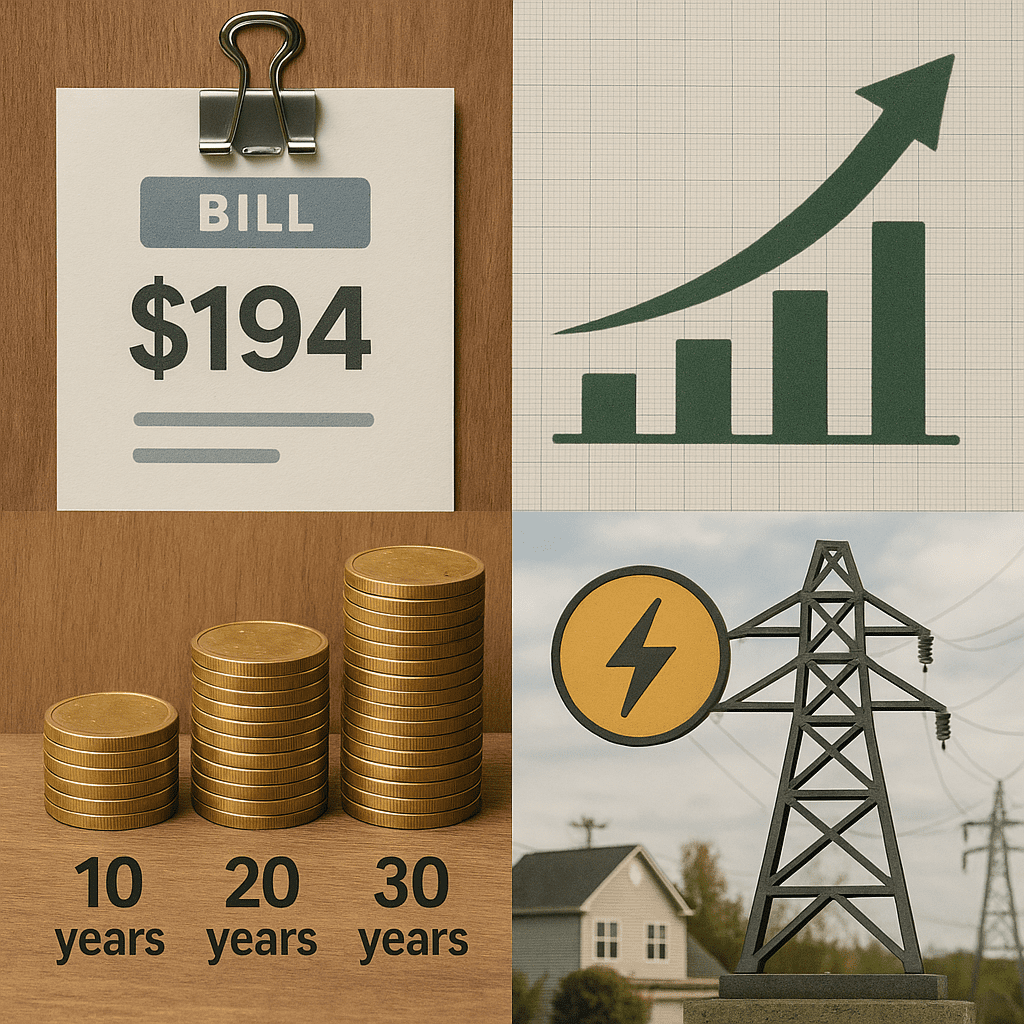
That $194 monthly bill might not seem devastating today. But let’s look at the 30-year picture.
Assuming just a conservative 3.5% annual rate increase (historically, electricity rates have climbed faster):
- 10 years: $27,300
- 20 years: $65,900
- 30 years: $134,000
Think about that. You’re potentially looking at over $100,000 in electricity costs over the next three decades. And that assumes rates only increase 3.5% annually. If Pennsylvania accelerates its renewable energy mandates or infrastructure investments, increases could be steeper.
This is exactly why solar can save you money over the long term. You’re not just saving money this year, you’re protecting yourself against decades of rate inflation.
How Solar Panels Slash Your Electric Bill
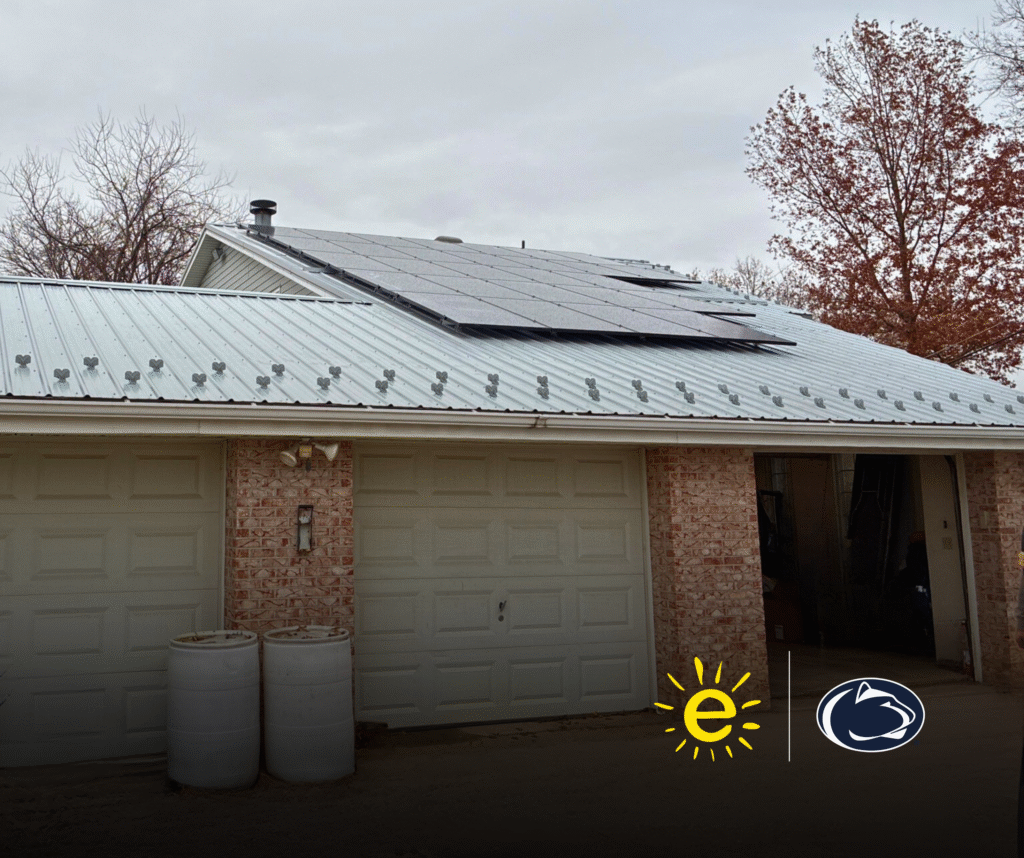
Here’s where things get interesting. Solar panels produce electricity during the day, directly offsetting what you’d normally buy from the grid.
Let’s use a typical Pittsburgh home as an example.
Annual consumption: 11,124 kWh
Required system size: About 9.2 kW
Average system cost: $24,000 (before incentives)
Cost after federal tax credit: $16,800
That 9.2 kW system will generate roughly 11,000 kWh per year in Pittsburgh, basically covering your entire annual consumption. Understanding how much electricity a solar panel produces and how many kWh your system can generate helps you determine the right system size for your needs.
Your monthly bills drop from $194 to just the minimum connection charges and any seasonal consumption that exceeds your solar production.
Real Savings Timeline
Here’s what that looks like in actual dollars:
- Year 1 savings: $2,300
- 5-year savings: $12,500
- 10-year savings: $27,300
- 20-year savings: $65,900
Your system typically pays for itself in 9-11 years. After that? It’s pure savings. Solar panels are warrantied for 25-30 years and often keep producing for 35-40 years.
At Ethical Energy Solar, we’ve installed systems where homeowners are essentially getting free electricity for the second half of their panels’ lifespan. That’s a pretty incredible ROI. Learn more about solar panels and your electric bill to see the full impact.
How Net Metering Makes Solar Work in Pittsburgh
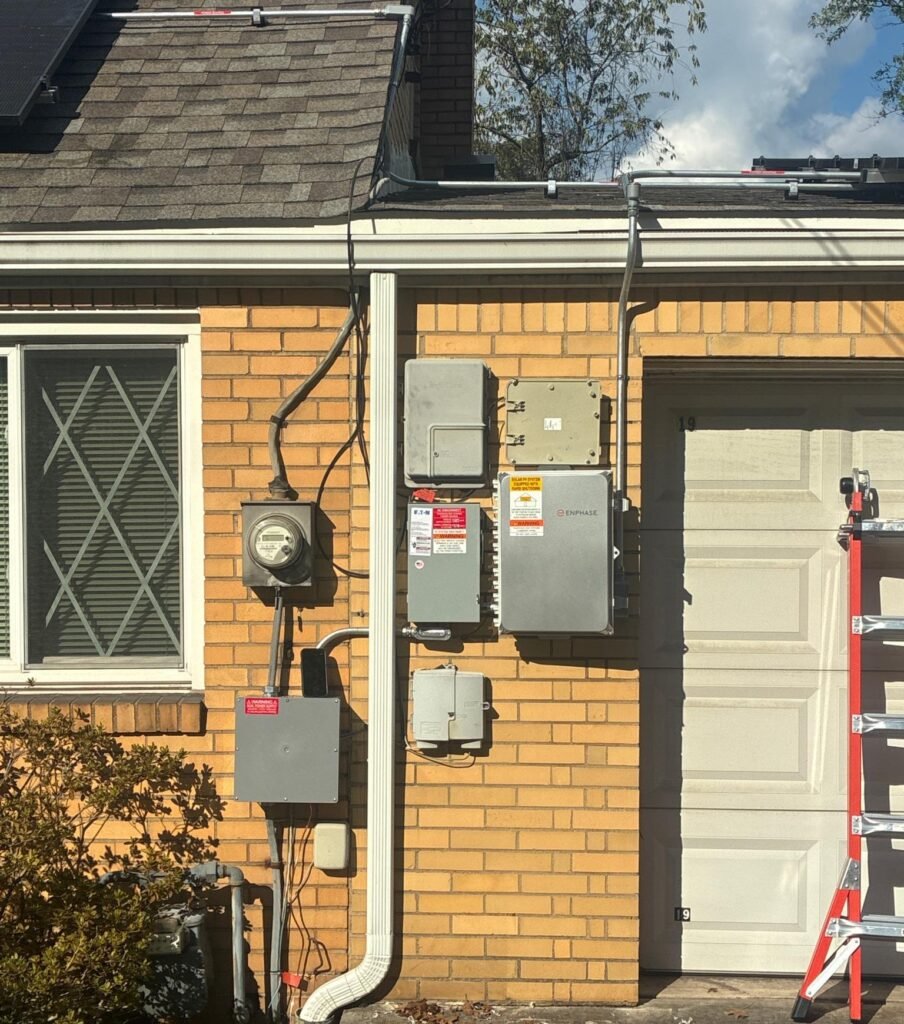
Pennsylvania’s net metering policy is absolutely critical for solar economics. Here’s how it works.
When your solar panels produce more electricity than you’re using, which happens most sunny days. That excess electricity flows back to the grid. Duquesne Light credits your account at the full retail rate (not some reduced “wholesale” rate).
Those credits roll forward month-to-month, covering nighttime and cloudy-day usage when your panels aren’t producing. To understand if net metering is worth it for your situation, consider how the credits balance out your annual consumption.
Example scenario:
- October production: 786 kWh generated
- October consumption: 622 kWh used
- Net result: 164 kWh credit banked for future use
Come winter when your panels produce less due to shorter days and lower sun angle, you draw down those banked credits. The annual “true-up” happens in June, when any remaining credits either convert to a small cash payment or reset. Learn more about Pennsylvania net metering policies and how they benefit solar customers.
This compensation structure makes solar viable even in a four-season climate like Pittsburgh. Summer overproduction balances winter underproduction through credits. Wondering what to do with excess solar power? Net metering provides the answer.
Recent Threats to Net Metering
We need to be transparent about one thing: Pennsylvania’s net metering policy is facing challenges. Some utilities, including PPL Electric, have proposed moving solar customers to hourly wholesale pricing instead of retail-rate credits. If those changes spread to Duquesne Light’s territory, solar economics would take a significant hit.
The good news? The solar industry and environmental organizations are fighting hard against these changes. And even if net metering compensation eventually decreases, battery storage technology is improving rapidly and becoming more affordable as a backup strategy.
Right now, though, net metering at retail rates is locked in for Pittsburgh, making this an optimal window for going solar.
Federal and State Solar Incentives for Pittsburgh Homeowners
The financial incentives for going solar have never been better, but time is running out.
Federal Solar Investment Tax Credit (ITC)
The big one: the federal solar tax credit covers 30% of your total installation cost, but only through December 31st, 2025.
For that $24,000 system we mentioned earlier, you’re getting a $7,200 tax credit that comes directly off your federal income tax liability. This isn’t a deduction, it’s a dollar-for-dollar reduction in what you owe.
After December 31st, 2025, this 30% credit expires. This means Pittsburgh homeowners have a limited window to capture this massive incentive. If you’ve been considering solar, now is the time to act. Learn more about tax breaks for installing solar panels and how to maximize your savings before the deadline.
Pennsylvania Solar Incentives
Pennsylvania doesn’t offer state tax credits for solar, but you benefit from several other programs:
Solar Renewable Energy Certificates (SRECs): Your system generates these tradeable credits based on production. Learn more about the PA Solar SREC program and how it provides ongoing income. Pennsylvania’s SREC market has fluctuated significantly in recent years, currently offering modest additional revenue, typically $200-500 annually for a residential system.
Property tax exemption: Solar installations don’t increase your property tax assessment in Pennsylvania, even though they increase your home’s value.
Sales tax exemption: You don’t pay Pennsylvania’s 6% sales tax on solar equipment purchases.
For a comprehensive overview, check out all Pennsylvania solar panel incentives available to homeowners.
Solar for All Program
Pennsylvania was awarded $156 million through the EPA’s Solar for All program in 2024, targeting 12,500 residential installations for low-income households across the state. While not yet fully operational as of early 2025, this program will provide grants and rebates dramatically reducing upfront costs for eligible homeowners.
If you qualify for programs like CAP (Customer Assistance Program) for electricity bills, watch for Solar for All enrollment opportunities rolling out this year. You can also explore if you qualify for free solar panels in Pennsylvania through various assistance programs.
Solar Panel Costs in Pittsburgh: What to Actually Expect
Let’s talk real numbers, no inflated projections or misleading quotes.
Average cost in Pittsburgh: $2.69 per watt installed
Typical system size: 8-10 kW for most homes
Total cost range: $21,500-$27,000 before incentives
After federal tax credit: $15,000-$18,900
System size depends entirely on your consumption. That 867 kWh monthly average needs about 9 kW. A larger home using 1,200 kWh might need 12 kW. A smaller, efficient home using 600 kWh might only need 6 kW. Proper solar panel sizing ensures you get the right system for your needs.
For a broader perspective on costs across the state, see our guide on Pennsylvania solar costs.
What Affects Your Final Cost?
Roof complexity: Simple layouts cost less. Multiple roof planes, dormers, or difficult angles increase installation labor. Understanding solar panel placement and solar panel mounting options helps optimize your installation.
Equipment quality: Premium panels (LG, SunPower, REC) cost more but offer better warranties and slightly higher efficiency. Mid-tier panels (Q CELLS, Canadian Solar, Silfab) deliver excellent value. Some homeowners prefer all black solar panels for aesthetic reasons.
Inverter choice: String inverters are cheapest. Microinverters cost more but perform better with shading or complex roof layouts.
Structural work: Older roofs might need replacement before solar installation. Factor this into your total project cost. At Ethical Energy Solar, we also offer roofing services to coordinate roof replacement with solar installation.
At Ethical Energy Solar, we provide transparent quotes breaking down all these costs. No hidden fees, no surprises when we show up to install.
Solar Financing Options: You Don't Need Cash Upfront
Most Pittsburgh homeowners don’t write a $24,000 check for solar panels. Here are your financing options.
Solar Loans
Monthly loan payments typically run less than your current electric bill, meaning you start saving from day one. Rates range from 3-7% depending on credit score and term length.
Example:
$20,000 loan at 4.5% over 15 years = $153/month
Current electric bill = $194/month
Immediate monthly savings = $41
Plus you get the full federal tax credit in year one, which you can use to pay down the principal. Explore all solar panel financing options in Pennsylvania to find what works best for you.
Solar Leases and PPAs
You pay little or nothing upfront, and a solar company owns the system on your roof. You pay them a fixed monthly fee or a per-kWh rate lower than utility rates.
The catch: You don’t get the federal tax credit (the leasing company claims it), and long-term savings are significantly lower than ownership.
We generally recommend loans over leases for Pittsburgh homeowners who can qualify. Ownership delivers better long-term value.
PACE Financing
Property Assessed Clean Energy (PACE) programs attach solar costs to your property tax bill. Not widely available in Allegheny County yet, but worth checking if you’re looking for long-term, low-rate financing.
Cash Purchase
If you can swing it, paying cash delivers the best ROI. You capture the full tax credit, avoid interest charges, and see the fastest payback period, typically 8-10 years in Pittsburgh.
The Solar Installation Process in Pittsburgh
Wondering what actually happens when you go solar? Here’s the step-by-step process we use at Ethical Energy Solar.
1. Site Assessment and Proposal (Week 1)
We visit your home to evaluate roof condition, orientation, shading, electrical panel capacity, and energy usage. You get a detailed proposal showing system size, equipment specs, production estimates, and total costs. Learn more about how our process works.
2. Permitting and Design (Weeks 2-4)
Our team handles all permit applications with the City of Pittsburgh or your local municipality. We also submit interconnection applications to Duquesne Light for grid connection approval.
Pittsburgh’s permitting process is relatively straightforward compared to some regions, typically taking 2-3 weeks for residential systems.
3. Installation (1-3 days)
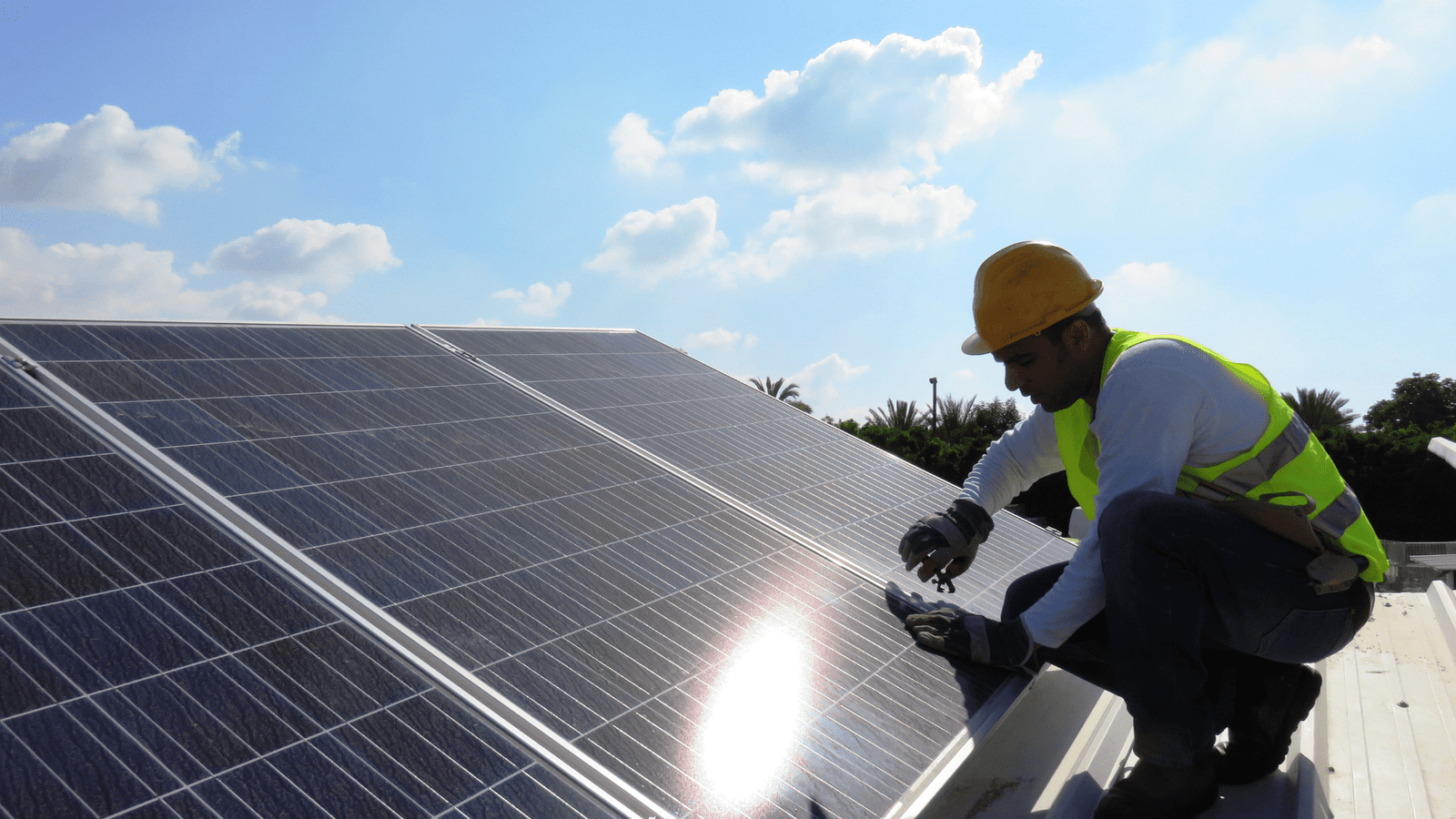
The actual installation usually takes 1-3 days depending on system size and roof complexity. Our NABCEP-certified installers mount racking, install panels, run conduit, connect inverters, and integrate with your electrical panel.
You’ll have some noise during installation, but you can stay in your home throughout the process. We clean up completely when finished. See how long it takes to get solar panels installed for detailed timelines.
4. Inspection and Grid Connection (Weeks 1-2 after install)
The city building inspector visits to verify code compliance. After passing inspection, Duquesne Light installs a bi-directional meter and grants “permission to operate” (PTO).
This is when your system officially goes live and starts producing credits.
Total timeline: 6-10 weeks from contract signing to operational system
We’ve completed installations faster during slow seasons and seen delays during peak summer when permitting offices get backlogged. But that 6-10 week window is pretty typical in Pittsburgh. Many homeowners choose to install solar panels before the holidays to maximize their first-year savings.
Will You Still Have an Electric Bill with Solar?
Short answer: probably yes, but it’ll be tiny.
Even with a perfectly sized solar system covering 100% of your annual consumption, you’ll still receive monthly bills from Duquesne Light. Here’s why:
You still owe connection charges: That $10-15 customer charge plus minimal distribution fees continue regardless of your consumption.
Seasonal variation means monthly differences: Your panels overproduce in summer (generating credits) and underproduce in winter (using credits). Some months you’ll pull from the grid, others you’ll send excess back.
Net metering true-up happens annually: June is when credits reset and any remaining balance gets settled.
Realistic scenario for a well-sized system:
- Summer months: $10-25 bills (minimum charges only, big credit balance)
- Winter months: $30-60 bills (using some grid power plus banked credits)
- Annual total: $200-500 instead of $2,328
That’s 85-92% savings compared to pre-solar bills.
Some months you might actually receive credits reducing your bill to zero. We’ve had customers in particularly sunny months get small checks from their utility for excess generation beyond what they could bank.
Is Your Roof Right for Solar Panels?
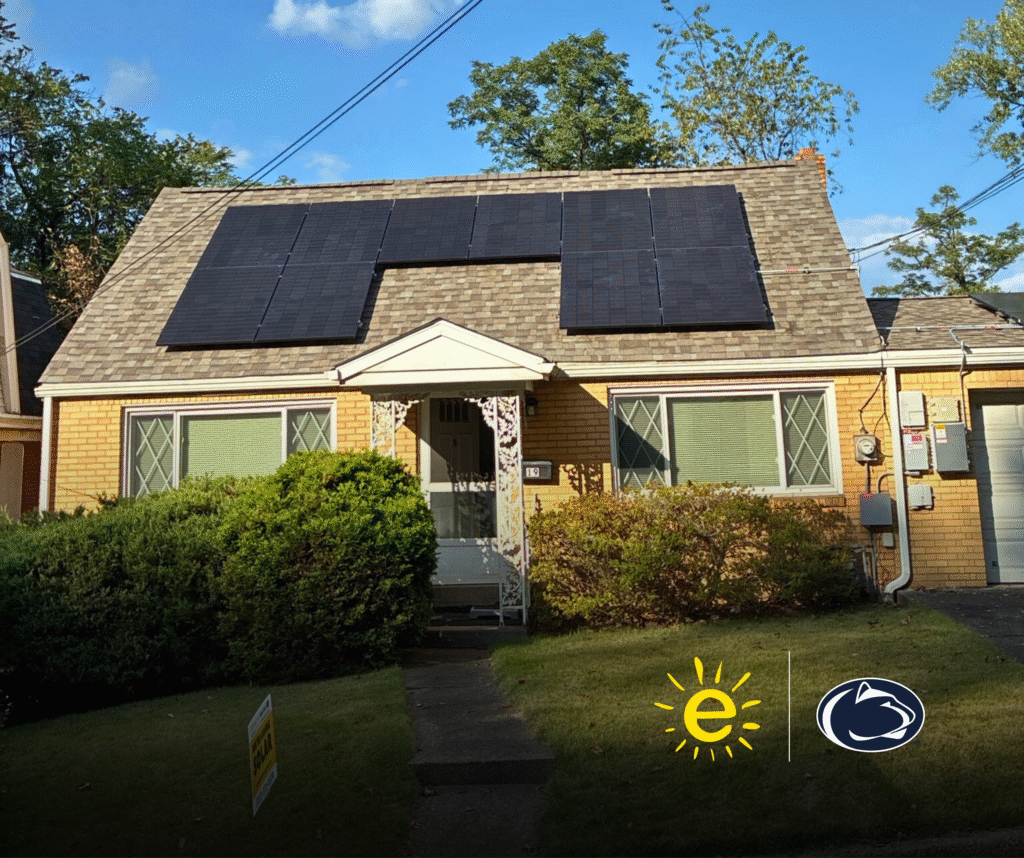
Not every roof is ideal for solar, but most Pittsburgh homes can make it work. Here’s what we evaluate.
Roof Orientation and Angle
Best: South-facing roofs at 30-40 degree pitch. This maximizes year-round sun exposure in our latitude.
Good: Southeast or southwest-facing roofs. You’ll get 90-95% of optimal production.
Okay: East or west-facing roofs. Production drops to 80-85% of optimal, but economics often still work.
Challenging: North-facing roofs or flat roofs. Sometimes we can use ground-mounted solar panels or optimize other roof sections. We also specialize in solar panels on flat roofs when needed.
Shading Analysis
Trees, chimneys, dormers, and neighboring buildings all create shade that reduces production. We use solar pathfinder tools to analyze shade patterns throughout the year.
Minimal shading (less than 10% annual): Full steam ahead.
Moderate shading (10-20%): Microinverters or power optimizers can minimize impact.
Heavy shading (over 30%): Might need tree trimming or a ground-mounted system.
Roof Age and Condition
Solar panels last 30+ years. Your roof should too.
If your roof is 10-15+ years old or showing wear, consider replacing it before solar installation. Removing and reinstalling panels later costs $3,000-5,000, so getting a new roof first saves money long-term.
We partner with local roofers to coordinate roof replacement + solar installation as a single project. Many homeowners finance both together.
Structural Capacity
Solar panels add about 3-4 pounds per square foot. Most Pittsburgh homes have adequate structural support, but older homes or those with previous structural issues might need reinforcement.
We evaluate this during site assessment and coordinate with structural engineers if needed.
Solar Battery Storage: The Next Frontier
Solar panels generate electricity during the day. Batteries store that electricity for nighttime use.
For most Pittsburgh homeowners, batteries aren’t financially necessary yet, net metering already solves the day/night mismatch through grid credits. But battery technology is improving rapidly and costs are falling. Learn more about storing solar energy with battery systems.
When Batteries Make Sense
Backup power: If you experience frequent outages or need guaranteed power for medical equipment, a battery system (typically Tesla Powerwall or similar) provides 1-2 days of backup.
Time-of-use rate optimization: If Duquesne Light or your supplier implements time-of-use rates with expensive peak periods, batteries let you store cheap midday solar power for expensive evening use.
Future-proofing: If net metering compensation drops, batteries become more valuable by letting you use more of your own solar generation instead of selling it back at reduced rates.
Current cost: $10,000-15,000 for a typical home battery system
At Ethical Energy Solar, we offer solar battery storage solutions for homeowners who need backup power or want to future-proof their system. We’re watching the battery market closely. Costs have dropped 40% in the past five years. With Eos Energy manufacturing batteries right here in Allegheny County, we expect continued price improvements and local availability advantages.
We typically recommend batteries for homeowners specifically needing backup power or those future-proofing against potential net metering policy changes. For pure economics right now, solar-only systems deliver better ROI.
Common Solar Myths Pittsburgh Homeowners Believe
Let’s clear up some misconceptions we hear constantly.
"Solar doesn't work in cloudy Pittsburgh"
Reality: Pittsburgh gets plenty of sun for excellent solar production. Yes, we’re cloudier than Arizona, but Germany is cloudier than Pittsburgh and leads Europe in solar installations.
Your panels produce electricity from diffuse sunlight on cloudy days, just at reduced output. Annual production in Pittsburgh is about 85% of sunny southwestern states, and our cooler temperatures actually improve panel efficiency.
"Solar panels need constant maintenance"
Reality: Solar panels have no moving parts. Rain washes away most dirt and debris. You might hose them off once or twice a year if you’re meticulous, but many homeowners never touch them.
We recommend visual inspections annually and professional cleaning every 3-5 years if you notice significant soiling. That’s it. Learn more about solar panel maintenance tips and maintenance costs.
"Solar will damage my roof"
Reality: Properly installed solar actually protects the roof section it covers. The racking mounts penetrate the roof at limited points, which we seal with professional-grade flashing that prevents leaks.
We’ve installed thousands of systems in Pittsburgh over the past decade with zero leak issues when installation follows best practices. Choosing an experienced, certified installer (like Ethical Energy Solar) ensures proper installation.
"I'll never recoup my investment"
Reality: With current incentives and Pittsburgh electricity rates, payback periods run 9-11 years. The system keeps producing for 30-40 years. Most homeowners see 200-300% return on investment over the system’s lifetime.
That’s significantly better than most investment portfolios and way better than continuing to send $200/month to utility companies. Discover how long solar panels last to understand the full investment timeline.
How to Choose a Pittsburgh Solar Installer

Not all solar companies are created equal. Here’s what to look for when selecting an installer.
Certifications and Experience
NABCEP certification: The gold standard for solar installers. Make sure lead installers carry this credential.
Local experience: How many Pittsburgh-area installations has the company completed? Familiarity with local permitting, Duquesne Light requirements, and weather conditions matters. Check out our solar installation projects and solar panel gallery to see our work.
Years in business: The solar industry has seen companies come and go. Look for installers with at least 5-10 years of track record. Learn more about our team and meet the team behind Ethical Energy Solar.
Transparent Pricing and Equipment
You should understand exactly what equipment you’re getting and what each component costs. Watch for:
- Detailed quotes breaking down panel costs, inverter costs, installation labor, permitting fees
- Clear equipment specifications (panel manufacturer/model, inverter type, warranty details)
- No hidden fees or surprise charges after signing
We’ve helped Pittsburgh homeowners escape bad contracts from high-pressure solar companies. Legitimate installers provide detailed, transparent quotes and give you time to make informed decisions.
Warranties and Service
Equipment warranties:
- Panels: 25-30 years performance warranty, 10-15 years product warranty
- Inverters: 10-25 years depending on type
- Racking and other components: 10+ years
Installation warranty: Separate workmanship warranty covering installation quality, typically 5-10 years
Service and support: Will the company still be around in 10-15 years to honor warranties? Local companies with established track records provide better long-term support than fly-by-night national installers.
At Ethical Energy Solar, we stand behind every installation with comprehensive warranties and a commitment to long-term customer support. We’re based right here in Pittsburgh, we’re not disappearing. Check our service areas to see if we cover your location.
Environmental Impact: Beyond Your Electric Bill
Saving money is great. Reducing environmental impact makes it even better.
A typical 9 kW solar system in Pittsburgh:
- Offsets 11,000 kWh annually (equivalent to avoiding 7,800 pounds of CO₂)
- Equals planting 350 trees per year in carbon sequestration
- Prevents 16,000 pounds of coal burning annually
Over 30 years, your solar system prevents roughly 230 tons of CO₂ from entering the atmosphere, equivalent to taking a car off the road for 23 years.
Pittsburgh’s electricity grid includes coal and natural gas generation, so every kilowatt-hour your panels produce directly displaces fossil fuel consumption. As Pennsylvania’s grid transitions toward renewables, you’re accelerating that transition while protecting yourself against future rate increases.
Solar and Home Value in Pittsburgh
Multiple studies show solar panels increase home values. The National Renewable Energy Laboratory found buyers will pay a premium of about $4 per installed watt.
For a 9 kW system, that’s approximately $36,000 in added home value, significantly more than your net cost after incentives.
In Pittsburgh’s housing market:
- Homes with solar sell faster (average 20% quicker than comparable non-solar homes)
- Solar appeals to environmentally conscious buyers and cost-focused buyers alike
- Owned systems add value; leased systems can complicate sales
One important note: if you’re selling within 3-5 years of installation, make sure you can transfer warranties and clearly communicate the energy savings to potential buyers. We provide detailed production records and warranty documentation to help with home sales. Learn more about selling a home with solar panels and whether solar panels increase home value.
What About HOAs and Historic Districts?
Homeowners Associations (HOAs): Pennsylvania law limits HOA authority to restrict solar installations. The Pennsylvania Solar Rights Act prevents HOAs from prohibiting solar, though they can impose “reasonable restrictions” on placement and appearance.
If your HOA pushes back, cite 73 P.S. § 3316, which protects your right to install solar. We’ve helped many Pittsburgh-area homeowners navigate HOA approval processes.
Historic districts: The Pittsburgh Historic Review Commission may require design review for solar installations on properties in historic districts. We’ve successfully permitted numerous installations in Shadyside, Squirrel Hill, and other historic neighborhoods by:
- Using low-profile black panels that blend with dark roofs
- Placing arrays on less-visible roof sections
- Providing detailed visual impact assessments
It adds 2-4 weeks to permitting, but it’s absolutely doable.
Solar + Electric Vehicles: A Powerful Combination
If you’re driving or considering an electric vehicle, solar panels become even more valuable.
Average EV electricity cost: Pittsburgh EV drivers using 350 kWh/month for vehicle charging pay about $74/month at standard rates. That’s $888 annually on top of home electricity costs.
With solar: That same 350 kWh comes from your panels at essentially zero marginal cost. A slightly larger solar system (add 3-4 kW) covers both home and vehicle energy needs.
Combined savings:
- Home electricity: $2,328/year → $300/year
- EV “fuel”: $888/year → $0
- Total annual savings: $2,916
Your EV becomes truly emissions-free when charged with solar power. And you’re protecting yourself against both rising electricity rates and potential gasoline price spikes.
We’re seeing more Pittsburgh homeowners install solar specifically to charge EVs. The economics are compelling when you’re offsetting both household and transportation energy costs. If you’re interested in expanding your system later, learn about adding solar panels to an existing system.
Ready to Slash Your Pittsburgh Electric Bill?
Look, you’re going to pay for electricity one way or another. The question is whether you keep sending $200+ per month to utility companies for the next 30 years, or whether you invest in solar and take control of your energy costs.
The average Pittsburgh homeowner will spend over $100,000 on electricity over the next three decades. That’s money gone forever.
Or you could invest $16,000-18,000 (after the federal tax credit) in a solar system that eliminates 85-95% of those costs and pays for itself in about 10 years. Then you get 15-25 years of virtually free electricity.
At Ethical Energy Solar, we’ve helped hundreds of Pittsburgh families make this transition. We’re not here to pressure you, we’re here to provide transparent information and help you make the right decision for your situation.
Some homes are perfect for solar. Some aren’t. Some homeowners should wait a few years until they’re ready to replace their roof. Some should move forward immediately to save thousands before the 30% solar tax credit decreases.
Want to see what solar would cost for your specific home and usage? We offer free, no-pressure site assessments where we evaluate your roof, analyze your electricity consumption, and provide a detailed proposal showing exact costs, savings projections, and payback timelines.
No generic estimates. No high-pressure sales tactics. Just honest analysis from a local Pittsburgh company with hundreds of installations and a decade of experience in this market.
Get your free solar quote today and find out exactly how much you could save. You’ve got nothing to lose except those $200 monthly electric bills. Contact us or explore how to install solar panels in the Pittsburgh area.

Frequently Asked Questions About Solar in Pittsburgh
Most Pittsburgh homeowners save $2,000-2,500 in the first year, with total savings over 25 years reaching $60,000-75,000 depending on system size and electricity rate increases. Your exact savings depend on current consumption, system size, financing method, and how much rates increase over time. Learn more about the top benefits of solar panel installation.
Solar panels continue producing throughout winter, though output drops due to shorter days and lower sun angles. Snow rarely causes problems, panels are angled and usually shed snow within 1-2 days. Cold temperatures actually improve panel efficiency compared to hot summer days. Annual production in Pittsburgh accounts for seasonal variation, with summer overproduction offsetting winter underproduction through net metering credits.
If your roof is less than 10 years old and in good condition, you can install solar immediately. Roofs 15+ years old or showing wear should be replaced first, since removing and reinstalling panels later costs $3,000-5,000. We inspect roof condition during site assessment and provide honest recommendations, we’d rather you get a new roof first than face expensive panel removal costs down the road.
Typical payback periods run 9-11 years with current incentives. Cash purchases pay back faster (8-10 years) than financed systems. After payback, you’re essentially getting free electricity for the remaining 15-25+ years of the system’s operational life. Total return on investment typically reaches 200-300% over 30 years.
Standard grid-tied systems shut down during outages for safety reasons (preventing electricity from back-feeding into grid lines workers might be repairing). If you want backup power during outages, you need a battery storage system, which adds $10,000-15,000 to total costs. Most Pittsburgh homeowners stick with grid-tied systems without batteries since our outages are relatively infrequent. Consider an off-grid home solar system if complete energy independence is your goal.
From contract signing to operational system: 6-10 weeks typically. The actual installation takes 1-3 days. Most time is spent on permitting, utility interconnection applications, and inspection scheduling. Summer installations sometimes take longer due to permitting office backlogs. We handle all paperwork, applications, and coordination, you just wait for installation day.
Technically yes, but we strongly recommend against it. DIY installations void equipment warranties, may not meet code requirements, won’t qualify for some incentives, and could create safety hazards or roof leaks. Professional installation costs represent maybe 15-20% of total system cost, not worth the risks of DIY. Plus, our volume purchasing often gets better equipment pricing than DIY homeowners can access.
Owned systems transfer to new owners and increase home value by approximately $4/watt installed. You’ll provide warranty documentation and production records to buyers. Leased systems are trickier, buyers must qualify to assume the lease or you’ll need to buy out the contract. This is one reason we recommend ownership over leasing when possible.
Minimal maintenance required. Rain typically keeps panels clean. We recommend visual inspections annually and professional cleaning every 3-5 years if you notice significant soiling. Inverters might need replacement once during the system’s 30-year life (around year 12-15 for string inverters). That’s about it.
Panels still produce electricity from diffuse sunlight on cloudy days, typically 10-25% of peak production depending on cloud density. Pittsburgh’s annual production factors in our cloudy days. You won’t get full output every day, but annual production totals still deliver strong economics and savings. Germany, cloudier than Pittsburgh, has massive solar deployment because annual totals matter more than daily variation.
For more detailed answers, check our complete solar FAQs page or explore whether solar panels are worth it in Pennsylvania.